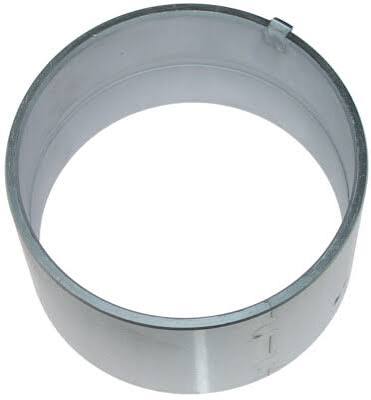
Can You Mix Rotary Engine Parts From Different Mazda 13B Engines?
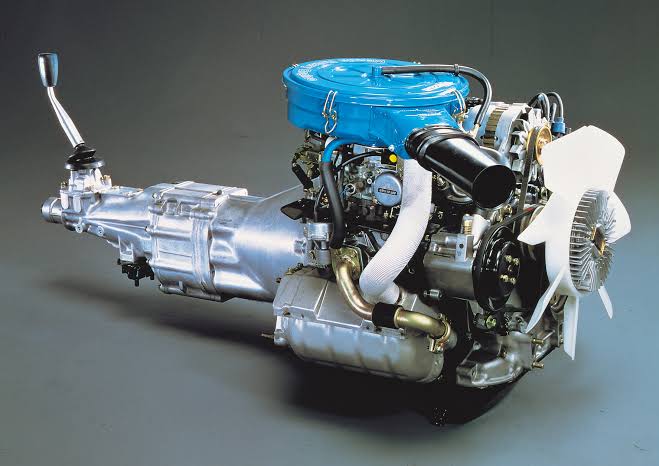
Can you mix rotary engine parts from different Mazda 13B engines? Sometimes, but you should never assume that two parts are interchangeable simply because both engines are called a 13B.
Mazda produced several versions of the 13B over many years, including naturally aspirated, turbocharged, and later Renesis versions. Their internal architecture and individual components changed over time. Mazda itself separates its rotary rebuild parts by engine periods, including 1976–1985 13B, 1986–1992 13B, 1993–1995 13B, and 13B Renesis applications.
Some components can be shared between particular 13B generations, while others require matching parts from the same engine family or production range.
If you’re rebuilding a Mazda rotary engine, the safest approach is to identify the exact 13B first and verify each part individually before assembly.
Why Are There Different 13B Parts?
The name 13B describes a family of Mazda two-rotor engines rather than one identical engine produced unchanged for decades.
The 13B appeared in several configurations, including:
- Early naturally aspirated 13B engines
- 13B-RESI
- 13B-DEI
- 13B-T
- 13B-RE
- 13B-REW
- 13B-MSP Renesis
These engines can share some basic rotary design characteristics while differing in housings, porting, seals, eccentric shafts, oil systems, intake and exhaust arrangements, and external components.
This is why ordering a part based only on the word “13B” can lead to compatibility problems.
Can You Mix Parts From Different 13B Engines?
Yes, some 13B components can be mixed when the specific parts are confirmed compatible.
However, compatibility is usually determined by more than the engine’s displacement or family name.
You need to consider:
- Engine generation
- Engine code
- Production period
- Naturally aspirated or turbocharged configuration
- Rotor and housing dimensions
- Port configuration
- Seal design
- Eccentric shaft design
- Bearing dimensions
- Oil-system design
- Cooling-system arrangement
- Intended application
For example, Racing Beat notes that rotor housings from earlier and later 13B generations can have dimensional differences significant enough that it does not recommend mixing certain pre-1986 and 1986-and-later rotors and housings.
So the answer isn’t simply “yes” or “no.” It depends on the individual components.
Which 13B Parts Should You Be Most Careful About?
Some rotary engine parts are much more sensitive to generation and application than others.
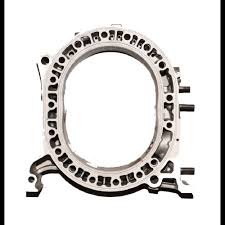
1. Rotor Housings
Rotor housings are among the most important components to match correctly.
The housing contains the rotor chamber and works directly with the rotor and sealing system. Differences in housing design can affect compatibility with the rotor, seals, and side housings.
One documented example is the difference between earlier and later 13B housings. Racing Beat specifically warns against mixing certain pre-1986 and 1986-and-later 13B rotors and housings because of differences in chamber shape.
Before buying a used rotor housing, verify:
- Engine generation
- Housing design
- Port configuration
- Rotor compatibility
- Seal arrangement
- Water-seal arrangement
- Condition of the chrome or surface
A housing that physically looks similar is not automatically suitable for your engine.
2. Rotors
Rotors also need to be matched carefully with the engine configuration and housing.
The rotor is part of a complete system involving:
- Rotor housing
- Apex seals
- Side seals
- Corner seals
- Rotor bearings
- Eccentric shaft
Changing one component can affect how the complete assembly works.
Earlier and later 13B engines can have differences that make indiscriminate mixing a poor approach.
If you’re assembling an engine from parts from multiple donors, identify the rotor and housing combination before ordering replacement seals or bearings.
3. Apex Seals
Apex seals are another area where you should avoid assuming that all 13B seals are identical.
Different generations can use different seal designs and dimensions.
The apex seal must correctly fit the rotor groove and work with the corresponding housing.
When purchasing apex seals, verify:
- Engine application
- Rotor type
- Seal thickness
- Seal length
- Seal groove dimensions
- Spring arrangement
This is particularly important when comparing older 13B engines with later designs.
A seal that fits into a rotor groove isn’t necessarily the correct seal for the complete engine.
4. Side Seals and Corner Seals
Side seals and corner seals also need to be checked against the rotor and seal system being used.
A rotary engine’s sealing system works as a complete assembly.
The apex, side, and corner seals all have to work together correctly.
When rebuilding a mixed-parts engine, don’t order a generic “13B seal set” without confirming exactly which 13B it is intended for.
The parts list should match the engine configuration rather than simply the 13B name.
5. Eccentric Shafts
The eccentric shaft is another component that should not be selected based only on the fact that it came from a 13B.
Different generations and configurations can have differences involving:
- Oil passages
- Front-end components
- Bearing arrangements
- Counterweights
- Thrust components
- Accessory arrangements
The eccentric shaft also has to match the rest of the rotating assembly.
Before reusing a shaft from another 13B, inspect it for:
- Journal condition
- Surface damage
- Runout
- Oil-passage condition
- Bearing compatibility
If the shaft has been exposed to a serious engine failure, don’t assume it is reusable simply because it appears normal visually.
6. Rotor Bearings and Main Bearings
Bearings need particular attention when mixing parts.
The correct bearing depends on the shaft, rotor, housing, and engine configuration.
A bearing should be checked using the applicable specifications for the engine being assembled.
Don’t assume that a bearing from one 13B automatically matches another 13B eccentric shaft.
If you’re combining a used eccentric shaft with different rotors and housings, the complete rotating assembly should be measured rather than assembled based on visual similarity.
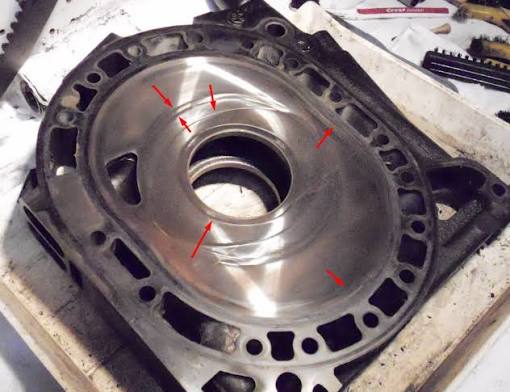
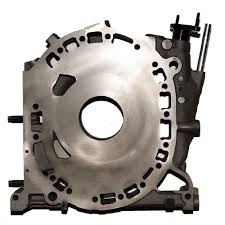
7. Side Housings
Side housings can also vary between 13B generations.
Their relationship with:
- Rotor housings
- Water seals
- Oil seals
- Porting
- Dowels
- Internal sealing components
needs to be considered.
The later 13B-MSP Renesis is a particularly important example.
The Renesis uses a side-exhaust design, while the 13B-REW uses peripheral exhaust ports. This means their housing architecture is fundamentally different, and the two engines should not be treated as interchangeable 13B assemblies.
8. Oil System Components
Oil-system parts can also vary between generations.
Depending on the engine, the system can involve:
- Oil pump
- Metering oil pump
- Oil injectors
- Oil lines
- Oil passages
- Oil cooler
- Related fittings
If you’re building a hybrid engine from multiple 13B donors, make sure the oil system is designed around the engine configuration rather than mixing components without verification.
Lubrication is too important to treat as an afterthought during a rotary rebuild.
What About 13B-REW and 13B-MSP Parts?
This is one of the clearest examples of why the term “13B” isn’t enough.
The 13B-REW was used in the Mazda RX-7 FD, while the 13B-MSP, commonly known as Renesis, was used in the Mazda RX-8.
They have major architectural differences.
The 13B-REW uses peripheral exhaust ports and a turbocharged configuration, while the 13B-MSP uses side exhaust ports and a naturally aspirated design.
As a result, you should not approach these engines as if their major internal components were interchangeable simply because both carry the 13B name.
For example, their rotor housings and side housings are designed around different port arrangements.
If you’re rebuilding a 13B-MSP, source parts specifically identified for the Renesis unless compatibility has been confirmed.
Can You Mix 13B-T and 13B-REW Parts?
This question is more complicated because there are examples of components being shared or used across certain turbocharged 13B applications.
However, “13B-T” and “13B-REW” still represent different engine applications and should not automatically be treated as identical.
Even when a particular internal component can be used across applications, other related parts may differ.
For example, the eccentric shaft, front-end components, bearings, counterweight, and external accessories need to be considered as an assembly.
The important distinction is:
A compatible part does not necessarily mean the entire engine configuration is interchangeable.
What Parts Are More Likely to Be Shared?
Some smaller components may be shared across particular 13B applications.
Depending on the specific engine generation, this can include certain:
- Seals
- Seal springs
- O-rings
- Gaskets
- Hardware
- Bearings
- Oil-system components
But even these should be verified by application or part number.
Mazda’s own rotary rebuild parts lists are separated by engine periods, which is a useful reminder that “13B” alone isn’t sufficient identification.
What Parts Should You Avoid Mixing Without Verification?
When building a 13B from multiple engines, be particularly careful with:
- Rotor housings
- Rotors
- Apex seals
- Side seals
- Corner seals
- Eccentric shafts
- Rotor bearings
- Main bearings
- Side housings
- Stationary gears
- Oil-system components
- Front and rear housings
- Counterweights
These components interact with one another, so compatibility should be considered as a complete system.
How to Check if Two 13B Parts Are Compatible
Before installing a part from another engine, follow a simple process.
Step 1: Identify Both Engines
Record:
- Engine code
- Vehicle
- Model year
- Naturally aspirated or turbocharged
- Generation
- Original market if relevant
Don’t rely only on the seller’s description.
Step 2: Identify the Part
Find the exact part number where possible.
A Mazda part number is much more useful than a description such as “13B rotor.”
Step 3: Compare the Application
Check whether the part is listed for both engine configurations.
Mazda’s parts information and engine-specific rebuild documentation can help establish the intended application.
Step 4: Measure Critical Components
For used major components, visual inspection isn’t enough.
Depending on the component, measurements may include:
- Dimensions
- Clearances
- Runout
- Journal condition
- Housing dimensions
- Seal-groove dimensions
Use the applicable Mazda service information for the engine being assembled.
Step 5: Check the Complete Assembly
Don’t evaluate the component in isolation.
A rotor may appear suitable, but it still needs to work correctly with the:
- Housing
- Eccentric shaft
- Bearings
- Seals
- Stationary gears
- Oil system
Can You Build One 13B From Two Engines?
Yes, it is possible to use components from more than one donor engine, but this should be treated as a parts-selection and measurement exercise, not simply a parts swap.
For example, you might have:
Engine A
- Good rotor housings
- Damaged rotor
- Good eccentric shaft
Engine B
- Good rotors
- Damaged housing
- Usable seals and hardware
The temptation is to combine everything into one engine.
Instead, inspect each component and establish whether the parts belong to a compatible configuration.
The final engine should be assembled from components that are confirmed to work together.
Why Mixing Parts Can Cause Problems
The biggest problem isn’t necessarily that a component won’t physically fit.
The problem is that it may fit while still being incorrect.
Potential issues include:
- Incorrect clearances
- Incorrect seal dimensions
- Rotor-to-housing mismatch
- Bearing incompatibility
- Incorrect oil passages
- Porting differences
- Incorrect water-seal arrangement
- Incorrect front-end components
- Problems with external accessories
This is why experienced rotary builders generally identify the engine generation before deciding which used parts are worth keeping.
A Practical 13B Parts-Mixing Checklist
Before combining parts from different Mazda 13B engines, check:
- Exact engine code identified
- Engine generation identified
- Donor vehicle identified
- Naturally aspirated or turbo configuration confirmed
- Rotor compatibility confirmed
- Rotor housing compatibility confirmed
- Side housing compatibility confirmed
- Apex seals confirmed
- Side seals confirmed
- Corner seals confirmed
- Eccentric shaft inspected
- Bearing compatibility confirmed
- Oil-system compatibility confirmed
- Front and rear housing compatibility confirmed
- Part numbers checked where possible
- Critical components measured
- Final assembly checked against the applicable service information
Should You Buy a Complete 13B Rebuild Kit Instead?
A rebuild kit can make parts sourcing easier, particularly for seals, springs, gaskets, O-rings, and other smaller components.
However, a rebuild kit does not automatically solve compatibility issues with major used components.
You may still need to source and inspect:
- Rotor housings
- Rotors
- Eccentric shaft
- Bearings
- Side housings
- Stationary gears
A good approach is to inspect the engine first and then order the parts required for that specific configuration.
This can help prevent buying a generic kit that contains components unsuitable for your particular 13B.
Final Thoughts
You can mix rotary engine parts from different Mazda 13B engines, but only when the individual components are confirmed to be compatible.
The biggest mistake is treating every 13B as the same engine.
Mazda produced multiple 13B generations and configurations, and important differences exist in areas such as rotor housings, porting, seals, eccentric shafts, bearings, and oil systems. Mazda’s own parts documentation separates 13B rebuild applications by production periods, reinforcing the need to identify the exact engine before ordering parts.
If you’re building a 13B from multiple donor engines, identify each engine, verify the part numbers, inspect the components, and measure the critical parts before assembly.
When in doubt, match the part to the exact engine application rather than buying based on “13B” alone.