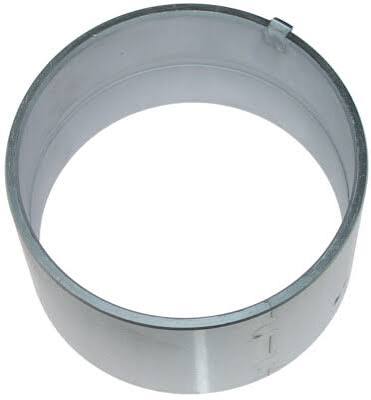
Rotary Engine Bearings Explained: Rotor Bearings vs Main Bearings
Bearings are some of the most important components inside a Mazda rotary engine, but they are also easy to misunderstand.
If you’re planning a rotary engine rebuild, you’ll come across terms such as rotor bearings, main bearings, stationary gear bearings, and eccentric shaft bearings. Although these components all support rotating or stationary parts of the engine, they do not perform the same job.
Understanding the difference matters when you’re ordering rebuild parts.
A bearing designed for a rotor is not automatically the same as a main bearing. Using the wrong bearing, incorrect clearance, or unsuitable application can create serious problems during engine assembly and operation.
This guide explains the difference between rotor bearings vs main bearings, what each component does, what causes bearing wear, and what you should check before installing replacement bearings.
What Are Bearings in a Rotary Engine?
A rotary engine doesn’t use pistons and connecting rods like a conventional reciprocating engine.
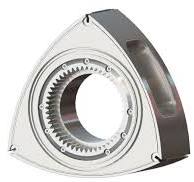
Instead, the rotor moves around an eccentric shaft inside the rotor housing. The rotor and eccentric shaft are supported by bearings that allow the required movement while maintaining controlled clearances and an oil film between the moving surfaces.
Mazda’s technical documentation identifies the eccentric shaft as a fundamental part of the rotary engine structure, while rotary parts suppliers separately catalog rotor bearings and stationary/main gear bearings.
The main bearing groups you’ll commonly encounter include:
- Rotor bearings
- Main or stationary gear bearings
- Pilot bearings on applications that use them
- Thrust-related bearings or components
- Other engine-specific bearing components
For a typical rebuild, the two most important categories to understand are the rotor bearings and main bearings.
Rotor Bearings vs Main Bearings: What’s the Difference?
The simplest distinction is:
Rotor bearings support the rotor on the eccentric shaft.
Main bearings support the eccentric shaft within the stationary engine structure.
Both are important, but they operate in different locations.
| Bearing | Primary Function | Associated Component |
|---|---|---|
| Rotor bearing | Supports the rotor on the eccentric shaft | Rotor |
| Main bearing | Supports the eccentric shaft in the stationary gear/housing structure | Eccentric shaft |
| Pilot bearing | Supports the transmission/input side of the shaft where applicable | Eccentric shaft |
| Thrust bearing/component | Controls axial movement where applicable | Shaft/engine assembly |
The exact bearing arrangement varies by Mazda rotary generation, so parts should always be matched to the specific engine.
For example, current rotary parts catalogs list rotor bearings and main stationary-gear bearings separately, with different applications and part numbers.
What Is a Rotary Engine Rotor Bearing?
A rotor bearing is installed between the rotor and the eccentric shaft.
Its job is to allow the rotor to rotate around the eccentric portion of the shaft while maintaining the correct relationship between the rotor and shaft.
The rotor bearing therefore plays a critical role in:
- Supporting the rotor
- Maintaining the correct rotor-to-shaft relationship
- Allowing controlled movement
- Maintaining an oil film
- Managing the loads transmitted through the rotor
Mazda rotary parts catalogs identify rotor bearings as dedicated components rather than treating them as interchangeable with main bearings.
Where Is the Rotor Bearing Located?
The rotor bearing is located inside the rotor assembly.
The eccentric shaft passes through the rotor, and the bearing sits between the rotor and the eccentric section of the shaft.
This arrangement is fundamentally different from a main bearing, which supports the shaft itself.
A useful mental picture is:
Rotor → Rotor Bearing → Eccentric Shaft
That relationship is one of the easiest ways to remember what a rotor bearing does.
What Is a Rotary Engine Main Bearing?
A main bearing supports the eccentric shaft within the stationary portions of the engine.
In rotary terminology, you may also encounter the term stationary gear bearing.
The exact terminology depends on the engine and parts catalog, but the important point is that this bearing is associated with supporting the eccentric shaft at the stationary gear/housing locations.
The eccentric shaft passes through these supported areas while the stationary gears and related components establish the rotor’s controlled movement.
Atkins Rotary catalogs separate “Rotor Bearings” from “Main Gear Bearings” and lists vehicle-specific stationary bearing applications.
Where Is the Main Bearing Located?
Main bearings are installed at the stationary support locations of the engine.
The basic relationship can be visualized as:
Stationary housing/gear support → Main Bearing → Eccentric Shaft
The main bearing therefore does not support the rotor directly.
Instead, it supports the shaft that drives and positions the rotor assembly.
Why Are Both Bearings Necessary?
A rotary engine has to control two different relationships.
First, the rotor needs to move correctly around the eccentric shaft.
Second, the eccentric shaft needs to rotate correctly inside its stationary supports.
That’s why you need separate bearing systems.
The rotor bearing handles the rotor-to-shaft interface.
The main bearing handles the shaft-to-stationary-support interface.
Both depend on proper lubrication and correct clearances.
A problem with either bearing can affect the overall engine.
How Rotary Engine Bearings Work With the Eccentric Shaft
The eccentric shaft is at the center of the rotary engine’s mechanical movement.
Instead of a conventional crankshaft with connecting rods attached to pistons, the eccentric shaft interacts directly with the rotary’s rotor assemblies.
The rotor bearings sit around the eccentric portions of the shaft.
The main bearings support the shaft at the stationary locations.
This means bearing condition and eccentric-shaft condition need to be considered together during a rebuild.
A worn bearing can damage the shaft, while a damaged shaft journal can quickly damage a new bearing.
That is why simply replacing bearings without inspecting the eccentric shaft is not a complete rebuild strategy.
What Causes Rotary Engine Bearing Wear?
Several conditions can contribute to bearing damage.
Oil Starvation
Bearings depend on a continuous supply of lubricating oil.
If oil supply is inadequate, the protective oil film can break down and metal-to-metal contact can occur.
This can produce accelerated wear or bearing damage.
Contaminated Oil
Dirt, metal particles, carbon, or other debris in the lubrication system can damage bearing surfaces.
A rebuilt engine should have a properly cleaned lubrication system before new bearings are installed.
Incorrect Bearing Clearance
Bearing clearance needs to match the requirements of the specific engine.
Too much clearance can affect oil control and support.
Too little clearance can interfere with the required oil film and operating movement.
The correct specification must come from the service information for the particular engine.
Damaged Eccentric Shaft
A bearing cannot compensate for a damaged shaft journal.
If the eccentric shaft has scoring, excessive wear, damage, or dimensional problems, the shaft needs to be evaluated before installing new bearings.
Overheating
Excessive engine temperature can affect lubrication and component dimensions.
A rotary engine that has experienced severe overheating should receive a thorough inspection before parts are reused.
Incorrect Assembly
Incorrect bearing installation, contamination during assembly, or failure to establish the correct clearances can cause premature problems.
Symptoms of Worn Rotary Engine Bearings
Bearing problems can produce several warning signs, but symptoms alone cannot always identify which bearing is responsible.
Possible signs include:
- Unusual engine noise
- Excessive mechanical clearance
- Oil-pressure problems
- Metal particles in the oil
- Abnormal wear discovered during teardown
- Damage to the eccentric shaft
- Reduced engine performance
- Excessive movement in the related assembly
The exact symptoms depend on which bearing is damaged and how severe the problem has become.
For that reason, bearing diagnosis should include physical inspection and measurement rather than relying only on symptoms.
What Does a Worn Rotor Bearing Look Like?
During a rebuild, inspect the rotor bearing carefully.
Look for:
- Scoring
- Discoloration
- Excessive wear
- Surface damage
- Embedded debris
- Abnormal contact patterns
- Signs of overheating
- Damage to the bearing edges
Also inspect the corresponding eccentric-shaft journal.
If the bearing shows severe wear but the shaft looks perfect, don’t automatically assume the shaft can be reused without measurement.
Likewise, a visually clean bearing does not prove that the clearance is correct.
What Does a Worn Main Bearing Look Like?
Main-bearing inspection is similar.
Look for:
- Scoring
- Surface wear
- Discoloration
- Embedded debris
- Uneven contact
- Evidence of oil starvation
- Excessive clearance
- Damage around oil passages or bearing surfaces
The eccentric-shaft main journals should also be inspected and measured.
A new main bearing installed against a damaged shaft journal can fail prematurely.
Rotor Bearing Inspection During a Rebuild
If the engine is already apart, inspect the rotor bearings systematically.
Step 1: Remove the Rotor
Carefully disassemble the engine according to the applicable service procedure.
Step 2: Remove the Bearing
Avoid damaging the rotor or bearing location during removal.
Step 3: Inspect the Bearing
Look for scoring, discoloration, wear, embedded debris, and abnormal contact.
Step 4: Inspect the Rotor
Check the bearing location in the rotor for damage or abnormal wear.
Step 5: Inspect the Eccentric Shaft
Check the corresponding eccentric journal for scoring, wear, or other damage.
Step 6: Measure
Use the appropriate measuring equipment and specifications for the engine.
Don’t determine bearing condition based solely on appearance.
Main Bearing Inspection During a Rebuild
Main bearings should be inspected alongside the eccentric shaft.
Check:
- Bearing surface condition
- Bearing location
- Oil passages
- Eccentric-shaft main journals
- Signs of overheating
- Signs of oil starvation
- Bearing clearance
- Shaft condition
The exact inspection procedure depends on the engine.
A 12A, early 13B, later RX-7 13B, 13B-REW, 13B-MSP, and 20B should not automatically be assumed to use identical bearing specifications or components.
Why Bearing Clearance Matters
Bearing clearance creates the space needed for the lubricating oil film between the bearing and the shaft.
The clearance needs to be controlled.
Too much clearance can allow excessive oil leakage from the bearing interface and reduce support for the shaft or rotor.
Too little clearance can restrict the oil film and create problems as components operate and temperatures change.
This is why bearing installation should always involve measurement.
The correct clearance is determined by the specific engine design, bearing, shaft condition, and manufacturer’s specifications.
Can You Reuse Rotary Engine Bearings?
For a serious engine rebuild, used bearings should not simply be reused because they look good.
Bearing condition needs to be evaluated against the requirements of the engine.
A bearing that appears visually acceptable may have already experienced wear and may not provide the desired clearance when reused.
The same principle applies to the eccentric shaft.
If the engine is being completely rebuilt, the bearings should be treated as components requiring careful inspection and measurement.
Should You Replace Rotor Bearings During a Rebuild?
Rotor bearings are commonly included in rotary rebuild kits.
For example, a current 1993–1995 RX-7 overhaul kit from Atkins Rotary lists rotor bearings and main bearings alongside the gasket and sealing components.
Whether a specific bearing should be replaced depends on the engine, its condition, and the rebuild requirements.
If you’re building an engine from a used core, inspect the bearing and the corresponding shaft or rotor surfaces before deciding what can be reused.
Should You Replace Main Bearings During a Rebuild?
The same principle applies to main bearings.
Main bearings are critical to eccentric-shaft support, so they should be inspected carefully during an overhaul.
A proper rebuild should establish the condition of:
- Main bearings
- Rotor bearings
- Eccentric shaft
- Rotor bearing locations
- Stationary bearing locations
- Oil passages
- Lubrication system
Replacing one bearing while ignoring a damaged mating surface can create a new problem rather than solving the old one.
Rotor Bearings vs Main Bearings on Different Mazda Rotary Engines
Mazda produced many rotary engines over several generations, and bearing applications vary.
12A Rotary Engine
The 12A is a two-rotor engine with its own bearing applications and specifications.
If you’re rebuilding an early RX-7 12A, identify the exact engine and parts before ordering bearings.
13B Rotary Engine
The 13B name covers several generations.
An early 13B, FC 13B, and other 13B configurations should not automatically be assumed to use identical bearing parts.
13B-REW
The FD RX-7’s 13B-REW uses dedicated rotary engine components, including vehicle-specific rotor and main bearing applications.
Mazda introduced the FD RX-7 with a two-rotor 13B engine using sequential twin turbocharging.
When rebuilding a 13B-REW, match the bearings to the exact engine configuration.
13B-MSP Renesis
The 13B-MSP used in the RX-8 has its own engine architecture and component applications.
Mazda’s technical documentation identifies the RENESIS as a two-rotor engine and shows the eccentric shaft and rotor assembly as fundamental components of its design.
Do not assume that bearings for an RX-7 13B-REW automatically fit a Renesis.
20B
The 20B is a three-rotor rotary engine.
The additional rotor changes the overall engine configuration and requires dedicated components.
Current rotary parts catalogs list a specific 20B center main bearing, demonstrating that bearing applications can vary substantially between rotary engine configurations.
Are Rotor Bearings and Main Bearings Interchangeable?
No.
They perform different jobs and are designed for different locations within the rotary engine.
A rotor bearing supports the rotor on the eccentric shaft.
A main bearing supports the eccentric shaft at the stationary support locations.
Even when two bearings may look similar, appearance isn’t enough to establish compatibility.
Always verify:
- Engine model
- Engine year
- Rotor configuration
- Bearing application
- Part number
- Bearing dimensions
- Manufacturer specifications
- Required clearance
What About Competition or Performance Bearings?
Performance rotary engines may use bearing designs with different oil-groove arrangements or clearance characteristics.
For example, Atkins Rotary lists competition rotor bearings with deeper oil grooves and additional clearance compared with its stated stock comparison, while also listing competition main bearings.
That does not mean a performance bearing is automatically better for every engine.
Bearing selection should match the engine’s:
- Intended RPM
- Power level
- Oil system
- Clearances
- Eccentric shaft
- Build purpose
A street engine and a dedicated competition engine may have different bearing requirements.
How to Choose Rotary Engine Bearings
Before ordering bearings, identify the engine first.
Then confirm:
1. Engine Type
Examples include:
- 12A
- 13B
- 13B-RE
- 13B-REW
- 13B-MSP
- 20B
- Other specialized rotary configurations
2. Rotor Count
A two-rotor and three-rotor engine don’t necessarily use the same complete bearing package.
3. Bearing Type
Confirm whether you need:
- Rotor bearings
- Main/stationary bearings
- Pilot bearing
- Other engine-specific bearing components
4. Shaft Condition
Inspect the eccentric shaft before selecting final bearing clearances.
5. Intended Use
A stock rebuild and high-performance build may have different requirements.
6. Manufacturer Specifications
Use the specifications for the exact engine rather than generic rotary bearing numbers.
Common Rotary Bearing Mistakes
Buying Bearings Based Only on “13B”
The 13B designation covers multiple configurations.
Always identify the specific engine.
Confusing Rotor and Main Bearings
These bearings operate in different locations and perform different jobs.
Installing Bearings Without Measuring
A new bearing doesn’t automatically mean the clearance is correct.
Ignoring the Eccentric Shaft
The shaft and bearing work as a pair.
Reusing Bearings Without Inspection
A bearing can look acceptable while still having wear or unsuitable clearance.
Mixing Bearing Specifications
Don’t combine components based on appearance or assumptions.
Choosing Performance Bearings Without Checking the Build
A competition-style bearing may have different characteristics from a standard bearing.
Select based on the actual engine requirements.
Rotary Engine Bearing Rebuild Checklist
Before final assembly, check:
- Exact rotary engine identified
- Rotor count confirmed
- Correct rotor bearings selected
- Correct main bearings selected
- Eccentric shaft inspected
- Rotor bearing surfaces inspected
- Main bearing surfaces inspected
- Oil passages cleaned
- Bearings inspected for damage
- Bearing clearance measured
- Correct assembly procedure followed
- Bearing specifications confirmed
- Intended engine use considered
Frequently Asked Questions
What is the difference between rotor bearings and main bearings?
Rotor bearings support the rotor on the eccentric shaft. Main bearings support the eccentric shaft within the stationary portions of the engine.
Does a rotary engine have main bearings?
Yes. Rotary engines use bearings to support the eccentric shaft at stationary support locations. Parts catalogs commonly refer to these as main gear or stationary gear bearings.
What does a rotor bearing do?
A rotor bearing supports the rotor around the eccentric portion of the eccentric shaft and allows the required movement while maintaining controlled clearance and lubrication.
What causes rotary engine bearing failure?
Common contributing factors include inadequate lubrication, contaminated oil, incorrect clearance, damaged shaft surfaces, overheating, and assembly problems.
Can you reuse rotary engine bearings?
Used bearings should be carefully inspected and measured against the requirements of the specific engine. For a complete rebuild, many builders replace the bearings rather than relying on previously used components.
Can worn bearings damage the eccentric shaft?
Yes. Severe bearing wear or lubrication problems can damage the mating shaft surfaces. The eccentric shaft should therefore be inspected whenever bearing wear is discovered.
Are 13B rotor bearings the same as 13B main bearings?
No. They perform different functions and are installed in different locations.
Are all Mazda rotary engine bearings interchangeable?
No. Bearing applications vary by engine, generation, rotor configuration, and intended use.
Does a 20B use different bearings?
The 20B has a three-rotor configuration and has engine-specific bearing applications. Parts catalogs list dedicated 20B bearing components, including a center main bearing.
Should I replace bearings during a rotary rebuild?
The decision depends on the condition of the engine and the rebuild specifications, but bearings are critical components that should be inspected and measured as part of a proper rebuild.
Final Thoughts
Understanding rotary engine bearings becomes much easier when you separate the two main functions.
Rotor bearings support the rotor on the eccentric shaft.
Main bearings support the eccentric shaft within the stationary engine structure.
They work in different locations, experience different loading conditions, and should never be treated as interchangeable parts.
During a Mazda rotary rebuild, inspect the bearings together with the eccentric shaft, rotor bearing surfaces, stationary bearing locations, oil passages, and other internal components.
Most importantly, don’t choose bearings simply because they are advertised for a “13B” or “Mazda rotary.” Identify the exact engine and bearing application, then establish the correct clearances using the appropriate specifications.
A careful bearing inspection can help catch problems before final assembly—and that’s far easier than discovering a bearing or shaft problem after the engine is back in the car.