What Causes Corrosion Inside a Mazda Rotary Engine Housing?
Corrosion inside a Mazda rotary engine housing is a problem worth taking seriously, especially when inspecting a used engine before a rebuild.
The most common areas of concern are the coolant passages, water-jacket areas, water-seal grooves, and surrounding housing surfaces. Mazda’s service information specifically instructs technicians to remove rust and deposits from cooling-water passages and inspect rotor housings for signs of water or gas leakage.
Corrosion doesn’t always mean a housing is unusable. The important questions are where the corrosion is located, how deep it is, and whether it has affected a sealing or structural surface.
This guide explains why Mazda rotary housings corrode, what to inspect, and when corrosion may make a housing unsuitable for reuse.
Why Does a Mazda Rotary Engine Housing Corrode?
Corrosion inside a rotary housing is generally associated with exposure to coolant, moisture, deposits, and long periods of storage.
Several conditions can contribute to the problem.
Old or Neglected Coolant
Coolant is designed to provide both heat transfer and corrosion protection. When the cooling system is poorly maintained, the protective properties of the coolant can deteriorate.
Specialist rotary-engine sources identify neglected antifreeze or coolant maintenance as an important cause of corrosion in Mazda rotor housings.
Once corrosion begins inside the cooling passages, it can eventually affect nearby sealing areas.
An Engine That Has Been Sitting for a Long Time
Long-term storage can be particularly problematic when coolant remains inside the engine.
A rotary-engine specialist documented a 13B side housing with significant corrosion after the engine had sat unused, along with evidence of coolant leakage around the water-jacket seal and groove.
Another RX-7 rebuild example described rust affecting seals after an engine had been left sitting with coolant inside for an extended period.
This doesn’t mean every stored rotary engine will develop serious corrosion. However, a long-unused engine deserves careful inspection before its parts are reused.
Water Contamination
Using water or an incorrect coolant mixture can reduce corrosion protection.
The condition of the coolant is therefore important when evaluating the history of a used rotary engine.
If you are buying a used engine, ask whether the cooling system was properly maintained rather than assuming the housings are clean internally.
Where Does Corrosion Usually Appear?
Not every part of a Mazda rotary housing is equally vulnerable.
When inspecting a used housing, pay particular attention to:
- Coolant passages
- Water-jacket areas
- Water-seal grooves
- Areas around coolant seals
- Rotor housing edges
- Areas around ports
- Areas near spark-plug openings
- Housing mating surfaces
Mazda service information specifically calls for removing deposits and rust from cooling-water passages and checking housings for water or gas leakage.
Corrosion Inside the Water Jacket
The water jacket is one of the first places to inspect.
Coolant flows through passages within the housings to carry heat away from the engine.
Over time, neglected coolant can leave rust, scale, and other deposits inside these passages.
When rebuilding an older rotary, clean the passages thoroughly before deciding whether the housing is suitable for reuse.
Look for:
- Rust
- Scale
- Pitting
- Flaking material
- Heavy deposits
- Restricted passages
- Evidence of coolant leakage
Mazda’s service procedures specifically instruct technicians to remove deposits and rust from the cooling-water passages during housing cleaning.
Corrosion Around Water-Seal Grooves
This is one of the areas that deserves particularly close attention.
The water-seal system helps prevent coolant from entering areas where it should not be.
If corrosion reaches the sealing groove, simply installing a new seal may not solve the underlying problem.
The groove and surrounding surface must still be capable of providing the required sealing function.
A rotary specialist has documented used Mazda housings where corrosion reached the water-seal area and considered the housing unsuitable for reuse.
Another specialist inspection of an older 13B found corrosion around the water-jacket seal and groove along with coolant leakage into the combustion chambers.
Can Corrosion Cause Coolant to Enter the Engine?
Yes, corrosion can contribute to coolant leakage when it damages a sealing area or creates a path through the housing.
That’s why evidence of previous coolant leakage is important when inspecting a used rotor housing.
Mazda service information instructs technicians to inspect rotor housings for traces of water or gas leakage before and during the inspection process.
Possible evidence can include:
- Coolant staining
- Deposits around sealing areas
- Corrosion near water seals
- Pitting
- Unusual discoloration
- Evidence of coolant entering the combustion area
However, corrosion is not automatically the only possible cause of coolant leakage. The complete sealing system should be inspected.
How Does Corrosion Damage a Rotor Housing?
Corrosion can progress from a surface issue into a dimensional or sealing problem.
Surface Rust
Light surface rust or deposits may be removable during proper cleaning.
Pitting
Pitting means material has actually been removed from the surface.
The deeper the pitting becomes, the more important its location is.
Corrosion Near a Seal
Corrosion around a water-seal groove is more concerning because it can affect the sealing surface.
Severe Material Loss
If corrosion has removed significant material or created a hole, crack, or damaged sealing area, the housing requires much more serious evaluation.
What Should You Inspect on a Corroded Mazda Rotary Housing?
Don’t look at the corrosion alone.
Inspect the entire housing.
1. Coolant Passages
Check for rust, deposits, scale, and restricted passages.
2. Water-Seal Grooves
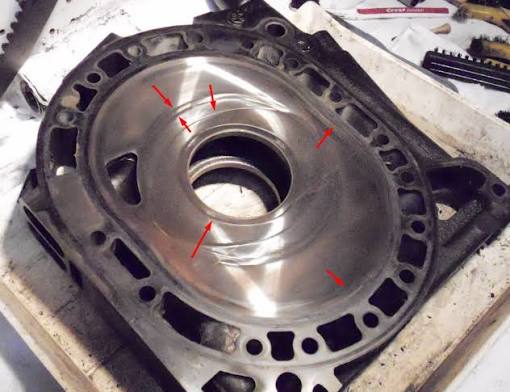
Look for pitting, corrosion, cracks, or missing material.
3. Housing Sealing Surfaces
Check for corrosion, scratches, gouges, and distortion.
4. Rotor Running Surface
On rotor housings, inspect the working surface separately from the coolant passages.
Mazda service information calls for inspection of the rotor housing’s finished surface and for checking cracks or damage to the plated surface on applicable engines.
5. Evidence of Water Leakage
Look for staining and deposits around the relevant sealing areas.
6. Evidence of Previous Repairs
A used housing may have been machined or repaired previously. Identify this before deciding whether it is suitable for another rebuild.
What Does Bad Corrosion Look Like?
There is a significant difference between light surface corrosion and corrosion that has compromised a housing.
Light Corrosion
Light discoloration or superficial deposits may be removable during cleaning.
Moderate Corrosion
Pitting or roughness requires closer examination, particularly if it is near a sealing area.
Severe Corrosion
Deep pitting, missing material, cracks, or corrosion extending into critical sealing areas should be treated as a serious problem.
One specialist source specifically warns that even relatively small corrosion damage around certain areas of used rotor housings can result in coolant leakage, emphasizing the need for very close visual inspection followed by dimensional checks.
Can a Corroded Mazda Rotary Housing Be Reused?
Sometimes, but you shouldn’t make the decision based only on the amount of visible rust.
Consider:
- Location of the corrosion
- Depth of the corrosion
- Whether material is missing
- Condition of the water-seal groove
- Condition of the rotor running surface
- Evidence of previous leakage
- Housing dimensions
- Applicable Mazda service specifications
A housing with minor corrosion in a non-critical area may be treated differently from one with deep corrosion around a water-seal groove.
If you’re unsure, have the component evaluated by a machine shop experienced with Mazda rotary engines.
Why Cleaning Is Not Enough
One of the biggest mistakes during a rotary rebuild is assuming that a clean housing is automatically a good housing.
Cleaning removes contamination, but it doesn’t restore metal that has already been lost to corrosion.
For example, a housing can look much better after removing rust and deposits while still having:
- Deep pitting
- A damaged water-seal groove
- Cracks
- Excessive wear
- Distortion
Mazda service procedures include dimensional checks in addition to cleaning and visual inspection.
The correct approach is:
Clean → inspect → measure where required → compare with specifications → decide whether to reuse or replace.
How to Clean Corrosion From a Mazda Rotary Housing
Cleaning should be performed carefully because the housing contains precision surfaces.
Mazda service information instructs technicians to remove rust and deposits from cooling passages while taking care not to damage finished housing surfaces.
A basic inspection process is:
Step 1: Remove Loose Deposits
Clean dirt, rust, and loose material from accessible coolant passages.
Step 2: Clean the Housing
Remove carbon and old sealing material using a method appropriate for the component.
Step 3: Clean the Water Passages
Make sure coolant passages are free of obvious debris and deposits.
Step 4: Dry the Housing
Dry the component completely before final inspection.
Step 5: Inspect Again
Cleaning can reveal pitting and corrosion that wasn’t obvious beforehand.
Avoid aggressive grinding or machining unless the appropriate repair procedure has been established.
Don’t Ignore Corrosion Around the Spark-Plug Area
On some Mazda rotary housings, the area around the spark plugs and nearby water-jacket sections deserves particular attention.
A specialist rotor-housing inspection source highlights the water-jacket area around the spark plugs as an area where even small corrosion damage can potentially result in coolant entering the engine.
When inspecting a used housing, don’t limit your examination to the most obvious coolant passages.
Use good lighting and inspect difficult-to-see areas carefully.
Can Poor Storage Cause Rotary Housing Corrosion?
Yes.
Storage conditions can influence corrosion, particularly when an engine remains unused for a long time with coolant or moisture present.
This is why a low-mileage rotary engine isn’t automatically a corrosion-free engine.
A rotary specialist documented significant corrosion on an older 13B that had been sitting unused, despite the engine having been maintained previously.
When purchasing a used Mazda rotary engine, ask about:
- How long it was stored
- Whether coolant remained in the engine
- Whether the engine was drained
- How the cooling system was maintained
- Whether the engine was previously overheated
- Whether the engine has already been rebuilt
The answers can help determine how carefully the housings should be inspected.
How Can You Prevent Corrosion in a Mazda Rotary Engine?
Prevention starts with proper cooling-system maintenance.
Use the Correct Coolant
Use coolant appropriate for the vehicle and follow the manufacturer’s recommendations.
Maintain the Correct Coolant Condition
Don’t treat coolant as a lifetime fluid.
Follow an appropriate maintenance schedule.
Avoid Leaving a Problematic Cooling System Unrepaired
A leaking or poorly maintained cooling system can create conditions that promote corrosion.
Inspect Stored Engines Before Reuse
If a rotary engine has been sitting for years, inspect the cooling passages and sealing areas before putting it back into service.
Keep Rebuild Components Dry
After cleaning parts, don’t leave bare metal components exposed to moisture for extended periods.
What Other Parts Should You Inspect If You Find Corrosion?
Corrosion inside the housing may indicate that other engine components deserve attention.
Inspect:
Water Seals
Check the seals and their grooves.
Side Housings
Look for corrosion around coolant passages and sealing areas.
Rotor Housings
Inspect the running surface, coolant passages, and sealing areas.
Rotors and Seals
Check for rust, sticking seals, damaged grooves, and other signs of prolonged moisture exposure.
Eccentric Shaft
Inspect the shaft and oil passages if the engine has been stored in poor conditions.
Bearings
Look for signs of corrosion, scoring, or other damage.
A rotary rebuild should be treated as a complete system rather than simply replacing the visibly damaged part.
Mazda Rotary Housing Corrosion Inspection Checklist
Before reusing a housing, check:
- Coolant passages cleaned
- Rust and deposits removed
- Water-seal grooves inspected
- Pitting checked
- Cracks checked
- Evidence of water leakage checked
- Evidence of gas leakage checked
- Rotor running surface inspected
- Plated surface checked where applicable
- Housing sealing surfaces inspected
- Previous repairs identified
- Housing distortion checked
- Applicable service specifications verified
- Side housings inspected
- Water seals checked
- Damaged components evaluated before reassembly
When Should You Replace a Mazda Rotary Housing?
Replacement should be considered when corrosion or other damage means the housing cannot meet the applicable service requirements.
Examples can include:
- Serious corrosion in a sealing area
- Deep pitting
- Cracks
- Significant material loss
- Damaged rotor-running surface
- Excessive distortion
- Damage beyond the applicable service limits
Mazda service documentation for earlier RX-7 applications specifies replacement when certain housing cracks, plated-surface damage, distortion, or dimensional conditions exceed the stated limits.
Don’t apply a specification from one rotary engine to another.
A 12A, 13B, 13B-REW, and 13B-MSP should be evaluated using the correct information for that specific engine.
Final Thoughts
Corrosion inside a Mazda rotary engine housing is usually a result of coolant-related corrosion, poor cooling-system maintenance, contamination, moisture, or prolonged storage.
The most important areas to inspect are the coolant passages, water-jacket areas, water-seal grooves, housing sealing surfaces, and rotor running surfaces.
Light surface corrosion may be manageable after proper cleaning, but deep pitting, cracks, significant material loss, or corrosion around critical sealing areas can make a housing unsuitable for reuse.
Most importantly, don’t make the decision based on appearance alone.
A proper rotary housing inspection should combine cleaning, visual inspection, dimensional checks where required, and comparison with the correct engine-specific specifications. Mazda’s service information supports this approach by requiring cleaning of cooling-water passages and inspection for water or gas leakage and housing condition.
If you’re rebuilding a used Mazda rotary engine, finding corrosion while the engine is apart is an opportunity to address the problem before reassembly—not something to ignore because the housing looks acceptable from the outside.
Mazda Rotary Housing Corrosion Mazda Rotary Housing Corrosion Mazda Rotary Housing Corrosion Mazda Rotary Housing Corrosion Mazda Rotary Housing Corrosion Mazda Rotary Housing Corrosion Mazda Rotary Housing Corrosion Mazda Rotary Housing Corrosion Mazda Rotary Housing Corrosion Mazda Rotary Housing Corrosion Mazda Rotary Housing Corrosion Mazda Rotary Housing Corrosion Mazda Rotary Housing Corrosion Mazda Rotary Housing Corrosion Mazda Rotary Housing Corrosion Mazda Rotary Housing Corrosion Mazda Rotary Housing Corrosion Mazda Rotary Housing Corrosion Mazda Rotary Housing Corrosion Mazda Rotary Housing Corrosion Mazda Rotary Housing Corrosion